CONTACT
REINE AH MOO
SHANNON SMITH
OFFICE
1585 Kapionlani Blvd. Ste. 1240
Honolulu, HI 96814
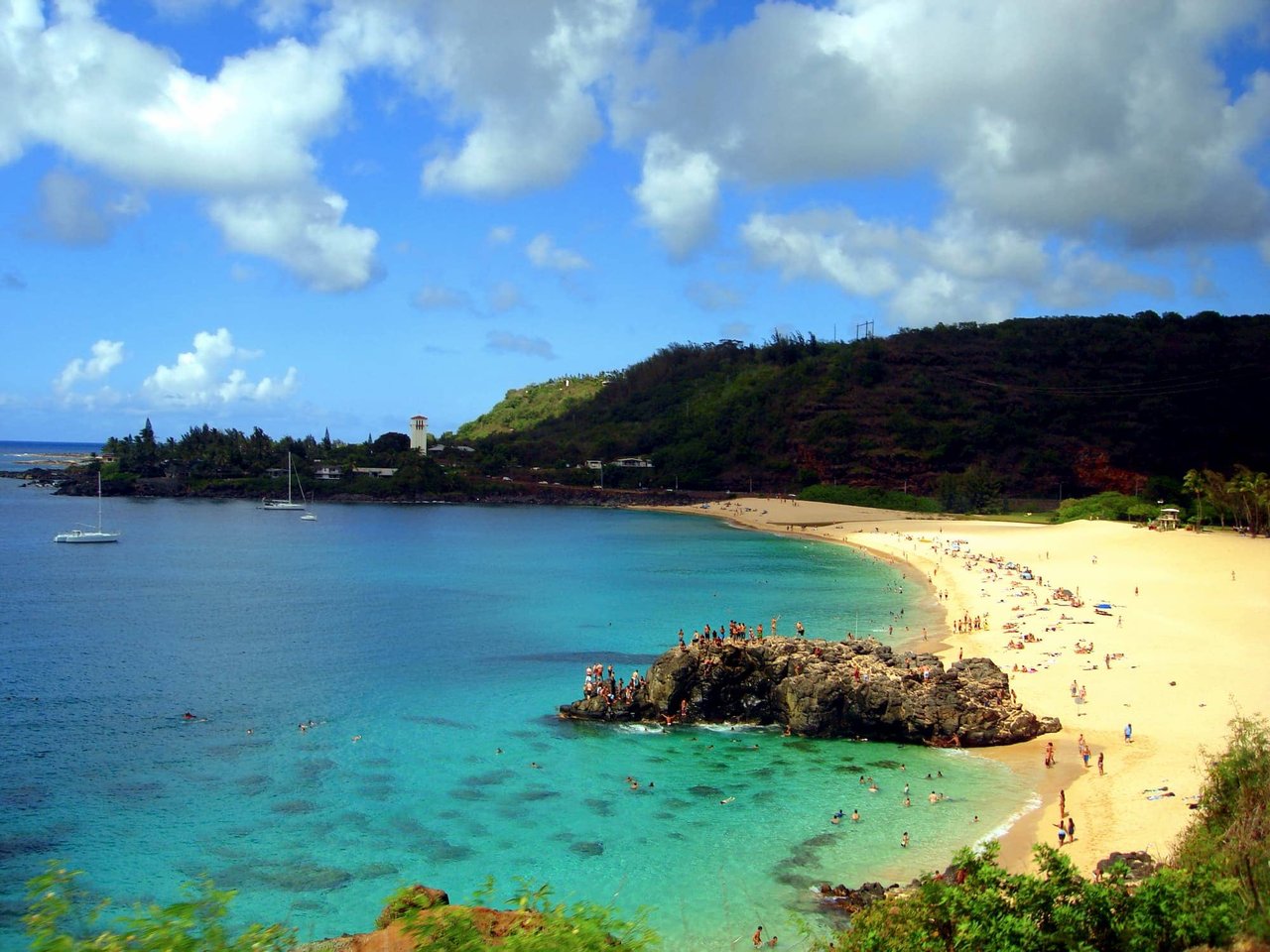
O‘ahu's North Shore is the island's most famous stretch of coastline, a rural region of surf breaks, plantation towns, and wide-open country. It runs from Mokulē‘ia and Waialua in the west through historic Hale‘iwa town, past the "Gold Coast" of Laniakea and Kawailoa, to Waimea Bay, Pūpūkea, and Sunset Beach. Each winter, swells of 20 feet and more turn the coastline into the world's surfing stage at breaks like Waimea Bay, the Banzai Pipeline, and Sunset Beach. In summer, the same waters often calm for snorkeling, swimming, and paddling. The real estate is mostly single-family homes on country-zoned lots, oceanfront and near-ocean properties, hillside view homes in Pūpūkea, and acreage. A smaller number of condos and townhomes in Hale‘iwa and Waialua offer lower entry points. Hale‘iwa is a designated historic district, and the region's rural zoning and limited development keep the North Shore feeling much as it has for decades.
Ready to see what's available? Explore North Shore homes for sale with Team Hawaii.
North Shore sales volume is low, and prices vary dramatically by location and proximity to the ocean. In 2026, monthly single-family medians have generally run from about $1.4 million to $2.8 million in Hale‘iwa and from about $1.9 million to $3.1 million in the Sunset Beach area. Pūpūkea has seen recent sales around $2.2 million. Near-ocean three-bedroom homes in the Sunset Beach area have recently sold in roughly the $1.75 million to $2.1 million range, and premium oceanfront and estate properties go well above that. [INSERT: current agent commentary on inventory, days on market, or a featured listing]
Thinking about buying or selling on the North Shore? Get a free home valuation or contact Team Hawaii to discuss shoreline, zoning, and rental considerations.
Waimea Valley is one of the last intact ahupua‘a on O‘ahu, the traditional land division running from mountain to sea. After Kamehameha the Great conquered O‘ahu in 1795, he awarded the valley to his most trusted spiritual advisor, the high priest Hewahewa Nui. Hewahewa died in 1837 and is buried in the valley. Overlooking Waimea Bay stands Pu‘u o Mahuka Heiau, now a state monument and historic site.
The Waialua Sugar Mill, originally known as the Chamberlain Plantation, operated from 1865 to 1996. By 1898 a new mill had been built, and the first crop was harvested in 1899. Between 1900 and 1906, four surface water collection systems were built, giving the Waialua plantation the largest water storage capacity in Hawai‘i. The mill drew generations of immigrant workers from Japan, the Philippines, China, Portugal, and Korea.
Before the hotel, there was no Hale‘iwa. The area was undeveloped land, and the nearest town was the plantation community of Waialua. Benjamin Dillingham's Oahu Railway & Land Company extended its line around Ka‘ena Point to the North Shore, and on August 5, 1899, Dillingham opened the Hale‘iwa Hotel, more than a year before Waikīkī's Moana Hotel. Guests crossed Anahulu Stream to fourteen suites, each with hot and cold running water. The name means "house of the frigate bird." The hotel closed for good in 1943, but its name lived on as the name of the town. Hale‘iwa Joe's restaurant now stands where the hotel once stood.
In 1951, Mamoru Matsumoto opened M. Matsumoto Grocery Store in Hale‘iwa. In the 1960s, the family began operating a shave ice stand inside the store, today one of the most famous on O‘ahu. Surfers discovered the North Shore's winter waves in the same era, and Hale‘iwa became the gateway to the world's most famous surf breaks. In 1984, the City and County of Honolulu designated Hale‘iwa a State Historic, Cultural and Scenic District. New buildings must follow a design plan reflecting the town's plantation-era architecture, and about 30 historic buildings remain.
The Waialua Sugar Mill closed in October 1996, the last sugarcane plantation on O‘ahu to shut down. An independent Waialua Farmers Cooperative was formed to help displaced sugar workers get into farming. Today the Old Waialua Sugar Mill is home to Waialua Estate coffee and chocolate, the North Shore Soap Factory, local surf shops, and makers.
In 2006, The Trust for Public Land helped return 1,875 acres of Waimea Valley to Native Hawaiian ownership through the Office of Hawaiian Affairs. In 2007, OHA conveyed ownership to its nonprofit Hi‘ipaka LLC, which stewards the valley's natural and cultural resources.
Mokulē‘ia & Waialua
Hale‘iwa Town
Kawailoa & Laniakea ("Gold Coast")
Waimea & Pūpūkea
Sunset Beach, Velzyland & Ke Nui Road
Kawela Bay & Turtle Bay
North Shore Legends:
Hale‘iwa Dining:
Around the Shore:
Surf & Ocean
Culture & Nature
Recreation
The North Shore is served by Hawai‘i Department of Education schools, including Hale‘iwa Elementary, Sunset Beach Elementary, Waialua Elementary, and Waialua High & Intermediate School. Public school assignments depend on the property's exact address. Always verify current assignments with the Hawai‘i Department of Education school finder.
Price Ranges & Property Types (2026)
Market Trends
Shoreline & Erosion — Critical Due Diligence
The North Shore is one of Hawai‘i's hot spots for coastal erosion, and 73% of its beaches are undergoing chronic erosion. In September 2024, a home on Ke Nui Road near Sunset Beach partially collapsed onto the beach during the season's first big north swell, and the State and City warned neighboring owners of the risk. Private shoreline armoring is prohibited on Hawai‘i's public-trust beaches. The State has funded a $1 million North Shore Beach Management Plan through UH Sea Grant, with results expected by December 2026. Before buying near the shoreline, review certified shoreline surveys, setbacks, erosion history, flood zones, and any open enforcement cases.
Rental Rules
Most of the North Shore is zoned residential, country, or agricultural, not resort, so short-term vacation rentals are generally not allowed outside limited exceptions such as resort-zoned Turtle Bay. Learn more in our guide to O‘ahu's 90-day rental rule.
Before You Buy:
From shoreline setbacks and erosion history to zoning, flood zones, and rental rules, North Shore real estate requires specialized local knowledge. Team Hawaii Real Estate helps clients evaluate risks, review documents, and find the right property for the North Shore lifestyle. Search North Shore homes, check your home's value, or connect with Team Hawaii Real Estate.
All market data is approximate and based on recent 2026 sales activity. For current information and a personalized market analysis, contact Team Hawaii Real Estate.
Sources: Wikipedia – Hale‘iwa · Hawaii Magazine – The Hale‘iwa Hotel · Wikipedia – Waialua Sugar Mill · Waimea Valley – History · Trust for Public Land – Waimea Valley · DLNR – North Shore Erosion Impacts · Surfrider O‘ahu – North Shore Erosion · Honolulu Neighborhood Commission Office
Explore Other Neighborhoods
1585 Kapionlani Blvd. Ste. 1240 Honolulu, HI 96814
1585 Kapionlani Blvd. Ste. 1240 Honolulu, HI 96814