For half a decade, the rusted bowl of Aloha Stadium sat at the edge of Salt Lake like a question nobody expected answered. Residents drove past it on the way to Costco, glanced at the empty seats from the H-1 overpass, and stopped waiting for news. This year, that changed. Not with one headline, but with three separate projects, all tied to the same stretch of Halawa and Salt Lake Boulevard, all hitting real dates within months of each other. If you tuned the stadium story out around 2022, you missed the part where "someday" turned into a construction schedule you can actually check.
The Bowl Is Actually Coming Down
Aloha Stadium closed to fans in December 2020 after the state condemned its rusting structure. For more than five years, its 50,000 seats sat empty while permits, funding structures, and design revisions moved at the pace state infrastructure projects tend to move. Dismantling did not begin until December 2025, and even then it started slow, with fencing and mobilization work rather than visible demolition.
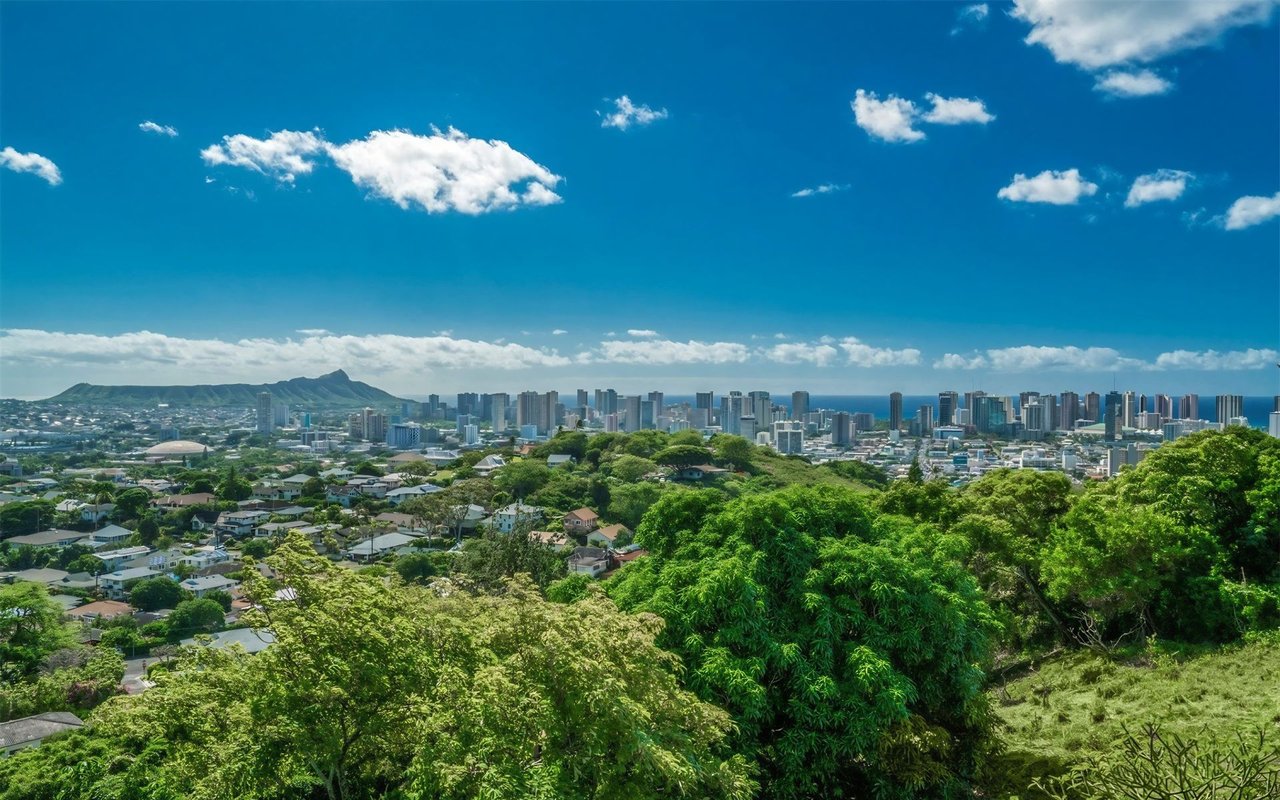
That changed by February 2026, when crews began cutting into the stadium's side awning, followed by months of what state officials called tripping exercises, removing the upper decks section by section using high-reach machinery rather than implosion. As of a site photo published in late July 2026, the skyline gap where the stadium once blocked the view has been visible for the first time in over 50 years. If you have not driven past Halawa recently, the change is not subtle.
The stadium replacing it will seat about 31,000 fans, a number that jumped after community pushback against an earlier plan for a much smaller 22,500-seat venue. State Sen. Glenn Wakai called the revised number "the sweet spot" after developer Stanford Carr presented the updated capacity, complete with 28 suites and individual seating with cup holders, to lawmakers in January 2026. Carr, whose firm Stanford Carr Development leads the Aloha Halawa District Partners consortium building the $4 billion, 20-year project, has been blunt about his priorities: "I'm local. I want the money to stay here."
The new stadium is not expected to open until March 2029, timed for the University of Hawaii's football season that year. The 98 acres around it will eventually include 4,100 housing units and three hotel towers, but that build-out plays out over two decades. For now, what Salt Lake residents are actually watching is demolition, not construction, and that demolition is scheduled to wrap by roughly mid-2026.
The Swap Meet Didn't Disappear. It Moved.
The Aloha Stadium Swap Meet had operated in the same spot for 46 years before the demolition forced its hand. Vendors were not uniformly thrilled about the move. Kam Tong Lam, who had sold carved wood decorations there for 13 years, described his expectations for the relocation as "so-so." Another longtime vendor, Phoebe Teoscon, said she wasn't sure the new setup would work in her favor.
The market officially reopened in its new home, the Upper Halawa parking lot, in October 2025, and it has now been running there for the better part of a year. The new layout groups vendors around a central area lined with rows of turquoise shipping containers, bridged by arched canopies, with additional pop-up tent space flanking both sides. Roscoe Kalilikane, who has sold through his HI Nesian Apparel booth at the swap meet for 35 years, put it simply: customers "can walk back and forth" and catch every vendor in one place, something the old sprawling layout didn't always allow.
If you haven't been back since the move, here's what's different:
- Parking is now in the Lower Halawa lot, reached by turning onto Kahuapaani Street rather than the old stadium entrance.
- Shoppers walk a pedestrian bridge from parking into the marketplace itself.
- Hours are Wednesday, Saturday, and Sunday from roughly 8 a.m. to 3 p.m., with Sunday opening earlier at 6:30 a.m. for the standard swap meet side.
- The new site includes an expanded food court and the Ho'okipa Hale entertainment tent, where local musicians now perform on a stage that didn't exist at the old location.
State officials expect this Upper Halawa version to serve as the swap meet's home for another five to ten years, until it eventually folds into the neighborhood's new residential and commercial build-out. For anyone who assumed the swap meet quietly closed when the demolition news started, it didn't. It just crossed the street.
The Boulevard Project Is Not Almost Done
Here's the part most residents get wrong. Salt Lake Boulevard has been under some form of construction since crews closed lanes between Ala Lilikoi Street and Maluna Street back in February 2022, with that segment originally expected to wrap by June 2024. But that segment was never the whole project. The stretch beyond it, from Maluna Street to Wanaka Street, is its own separate and final phase, and the Honolulu Star-Advertiser's Kokua Line column clarified in March 2024 that this piece, Phase 3B, would not even start construction until the fourth quarter of 2026, with a finish date in the fourth quarter of 2028.
That means the lane closures and detours onto Radford Drive or Likini Street that residents remember from a few years back, the kind Kokua Line fielded reader questions about in that same March 2024 column, were never the finish line. They belonged to an earlier phase. The real final stretch begins with Phase 3B this fall and doesn't wrap until 2028, roughly four years past when the original 2022 notice suggested the corridor's disruption would be behind everyone.
Layer onto that a separate but adjacent freeway project. The H-1 Salt Lake Rehabilitation work, resurfacing the stretch between the Pearl Harbor Interchange and the Salt Lake Boulevard underpass, had its completion estimate pushed from May 2026 to August 2026 as of a June 2026 Hawaii Department of Transportation update. That means one more piece of infrastructure tied to this same corridor is wrapping up right around now, the same month three other Salt Lake storylines are converging.
None of this is really about a single road. It's about a pattern residents can now name: projects around Salt Lake that felt permanently stuck for years all picked up real, checkable dates within the same twelve months.
What Didn't Move
Not everything near the construction zone is in flux. The Salt Lake Municipal Park still hosts the People's Market every Saturday morning, a tradition established by former Mayor Frank Fasi that lets residents buy fresh produce and fish directly from independent local producers, unaffected by anything happening a few miles away in Halawa. Salt Lake District Park, renovated back in 2003, still has its hiking trails looping the slopes of the Aliamanu and Aliapaakai craters, along with a gymnasium, courts, and a 50-meter pool that remains the park's newest addition. Hoa Aloha Park on Ala Ilima Street still fills with weekend soccer games the way it always has.
Fall brings back the neighborhood's other steady fixture. The Menehune Classic, a marching band festival hosted at Moanalua High School since 2003, returns this October, drawing high school bands from across the island to a non-competitive event where professional musicians offer feedback ahead of the real competition season. It has run every autumn for over two decades, stadium demolition or not.
Reading the Fall Calendar
Put together, the year's actual story for Salt Lake isn't that something new opened. It's that three long-stalled projects, easy to stop noticing after years of delay, all became real at once. The stadium you've been driving past for five years is visibly shrinking. The swap meet you might not have revisited is running a fuller schedule from a new address. And the road project you assumed wrapped up around 2024 still has a final phase starting this fall, one that runs past 2028.
Knowing which of these are finishing and which are just getting started changes how you plan the next year of weekends, whether that means a Saturday swap meet run through the new Kahuapaani Street entrance or budgeting extra minutes for the Radford Drive detour once Phase 3B construction picks up.
If you're weighing what any of this means for a home you already own in Salt Lake, or you're curious how a corridor this active tends to shape values over the next few years, Team Hawaii is glad to talk it through. Let's Connect.