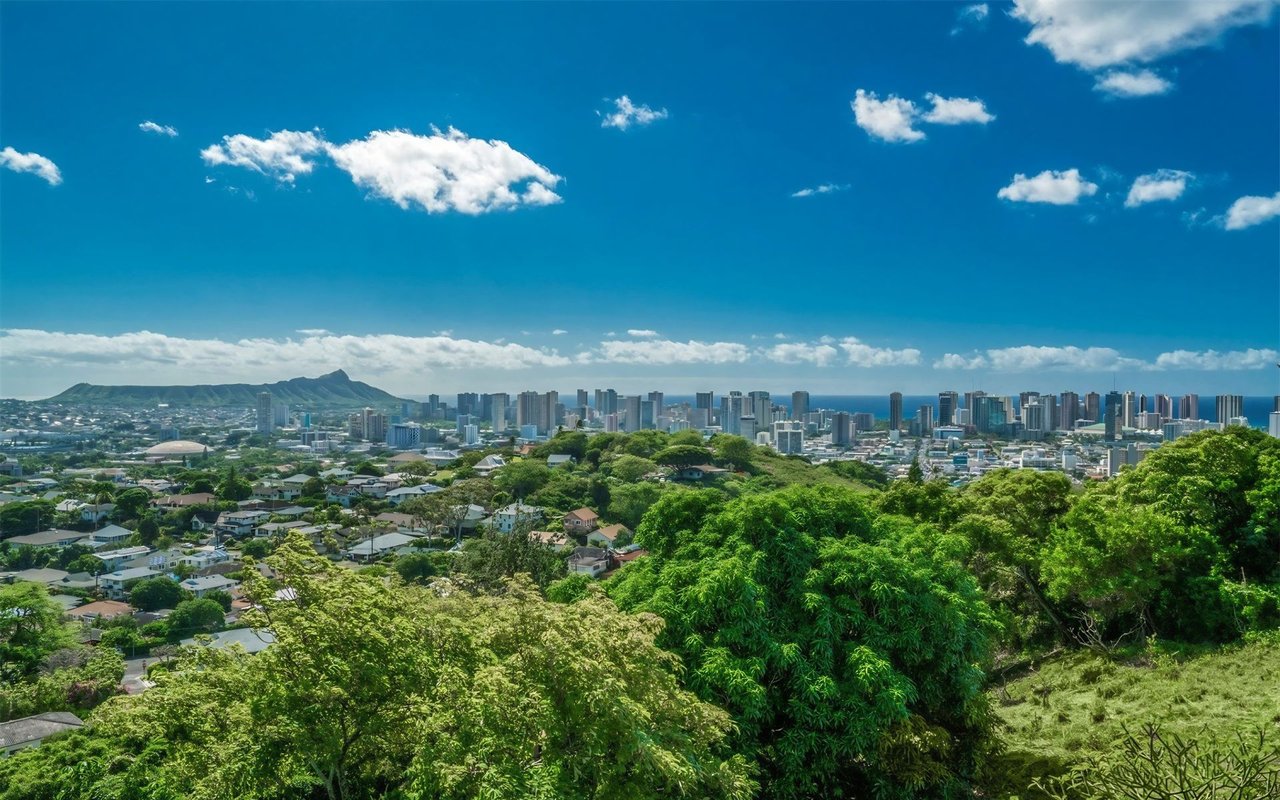
If you want Honolulu living with more greenery, more architectural character, and a little more breathing room, Mānoa often rises to the top of the list. This valley neighborhood feels different for real reasons, from its mountain-shaped climate to its long residential history. If you are exploring a move, a sale, or simply trying to understand what makes Mānoa stand out, this guide will walk you through the home styles, lot patterns, market context, and sub-areas that shape daily life here. Let’s dive in.
Why Mānoa Feels Different
Mānoa’s setting is a big part of its identity. According to the State of Hawaiʻi’s Rainfall Atlas and the University of Hawaiʻi at Mānoa, the islands’ mountains and trade winds create sharp rainfall differences over short distances. In practical terms, that helps explain why Mānoa often feels greener, mistier, and more rainbow-filled than lower parts of Honolulu.
That climate creates a very specific sense of place. As you move through the valley, you notice dense foliage, changing light, and a softer, cooler feel than many nearby urban neighborhoods. For buyers, that often translates into a strong emotional pull that is hard to duplicate elsewhere in town.
Mānoa also carries a long-established residential identity. Historic records show the valley was agricultural until the early 1900s, especially in Lower Mānoa, when farms gradually gave way to housing. That transition helps explain why the neighborhood still feels leafy, settled, and shaped by older streets rather than newer master-planned patterns.
Historic Homes Shape Mānoa Living
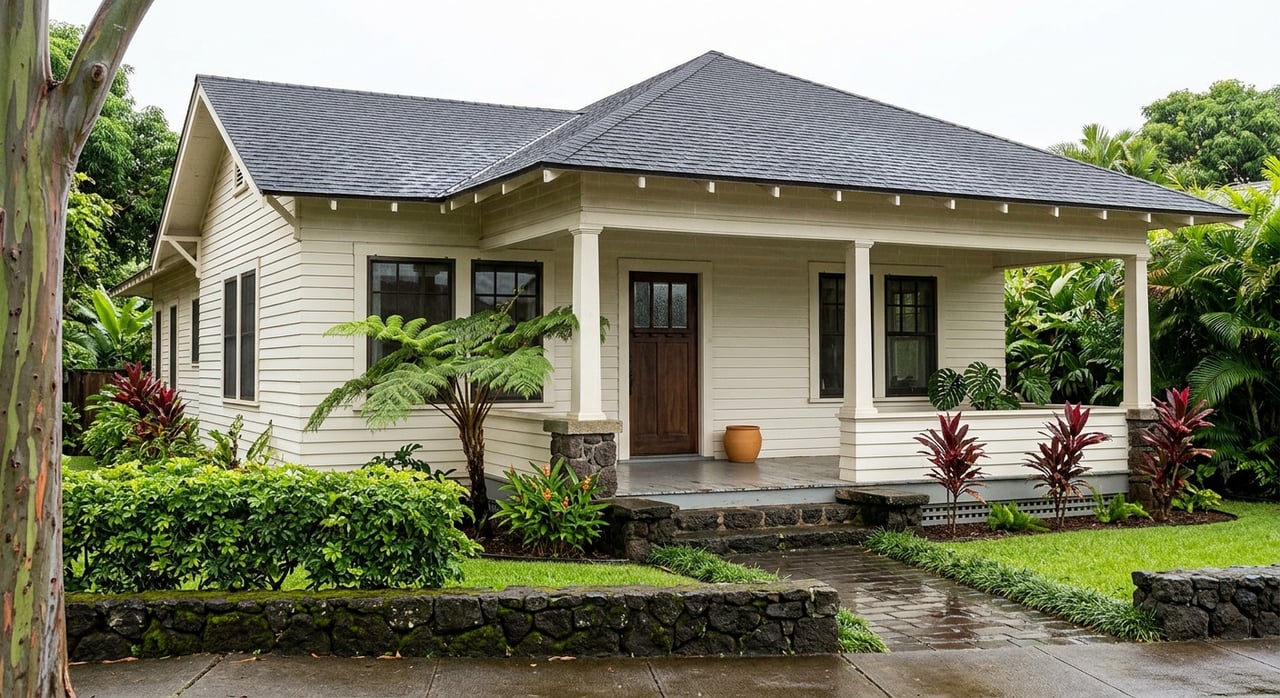
Mānoa is not a one-style neighborhood. Its appeal comes from a wide mix of historic and character-rich homes, with State Historic Preservation materials and National Register nominations identifying Craftsman, Hawaiian Craftsman, Territorial, Colonial Revival, English cottage, Victorian, and broader Hawaiian regional influences.
That variety matters if you are house hunting. Instead of seeing the same floor plan repeated block after block, you are more likely to find homes with distinct design choices, layered details, and a stronger connection to the valley setting. For many buyers, that is a major reason Mānoa feels personal rather than generic.
Common Character Details
Many Mānoa homes show visible details that connect architecture to climate and lifestyle. Historic nominations point to features such as wood framing, deep eaves, exposed rafter tails, lanais, and transitional indoor-outdoor spaces.
These details are not just decorative. In a valley known for rain, shade, and breezes, overhangs and covered outdoor areas can make a home feel more usable and comfortable. They also add to the relaxed, established look that many buyers associate with classic Honolulu living.
Notable Historic Examples
Several documented homes show just how broad Mānoa’s architectural range can be.
- George R. Ward House dates to 1923 and is described as an eclectic home with bungalow or later ranch characteristics, along with Colonial Revival and English cottage details.
- Malama Manor from 1927 is noted as an exceptional American Craftsman residence with a lava-rock foundation and local materials such as canec ceilings.
- Wrenn Guesthouse at 2848 Oahu Avenue, completed in 1939, is identified as Territorial in style with a strong roof form, wide open rafter overhangs, and indoor-outdoor features such as an engawa and deck.
- Petrie House blends Colonial clapboard and Victorian styling and sits within the broader story of Mānoa’s early neighborhood growth.
For sellers, this kind of architectural identity can be an important part of positioning a home. Buyers are often responding to more than square footage alone. They are also looking at craftsmanship, setting, and how a property fits into the larger story of the valley.
Lot Sizes Add To The Appeal
Mānoa often feels roomier than many central Honolulu neighborhoods, but that does not mean every property looks or lives the same. Honolulu’s Land Use Ordinance sets minimum lot areas for one-family detached dwellings at 5,000 square feet in R-5, 7,500 in R-7.5, 10,000 in R-10, and 20,000 in R-20 zones.
For added context, Homes.com reports a median lot size in Mānoa of 7,405 square feet, an average single-family home size of 2,068 square feet, and a median year built of 1961. Together, those numbers suggest a neighborhood that often offers more land and spacing than many in-town areas, while still feeling connected to Honolulu rather than far removed from it.
That said, lot size in Mānoa is highly street-specific. Historic examples on Oahu Avenue show parcels over 15,000 square feet and even just above 20,000 square feet, which is a reminder that conditions can change quickly depending on slope, position, and topography. If you are buying or selling here, it helps to look beyond headline numbers and evaluate each property on its own layout and setting.
Valley Views Come With Real-World Tradeoffs
The lush setting that draws people to Mānoa also calls for practical awareness. The same rainfall patterns that make the valley green can also affect drainage, runoff, and stream levels during heavy rain.
The National Weather Service documented very high rainfall rates in the upper valley during a major 2004 storm, and the Honolulu Fire Department warns that rain in valleys can raise stream levels quickly. That does not mean every property faces the same conditions, but it does mean buyers should pay attention to site-specific factors such as elevation, grading, drainage patterns, and how water moves around the lot.
For sellers, this is another reason clear preparation matters. A well-presented property story in Mānoa should cover not only views and character, but also practical details that help buyers understand how the home functions in a wet-valley environment.
Understanding Mānoa’s Sub-Areas
Mānoa is often easier to understand as a valley gradient than as a set of hard boundaries. HiCentral’s MLS map recognizes Mānoa-Lower, Mānoa Area, Mānoa-Woodlawn, and Mānoa-Upper. For most buyers and sellers, the more useful question is how the feel changes as you move from the valley entrance toward the mauka end.
Lower Mānoa
Lower Mānoa is generally the more access-oriented part of the valley. It sits closer to the urban side of Honolulu and the University of Hawaiʻi corridor, and historical records place some of the valley’s early residential shift from agriculture to housing in this area.
If you want a valley setting with easier connection to surrounding Honolulu, Lower Mānoa may be where your search begins. It often appeals to buyers who want Mānoa character without feeling too far into the valley.
Central Mānoa Area
The Mānoa Area is best understood as the broad residential core. This is where the established-valley identity often feels strongest, with older streets, mature landscaping, and a visible link to the neighborhood’s historic development.
For many people, this section captures the classic image of Mānoa. It is less about a single housing type and more about continuity, character, and a sense of long-standing neighborhood fabric.
Mānoa Upper
As you move higher into Mānoa Upper, the valley tends to feel wetter and more forested. The upper valley’s climate context is supported by rainfall and flood reporting, which reinforces the general expectation of a cooler, greener environment as elevation increases.
That mauka setting can be a major draw if you want stronger valley scenery and a deeper sense of retreat. At the same time, buyers should stay aware of slope, drainage, and weather exposure, since those factors can become more noticeable up-valley.
Mānoa Woodlawn
Mānoa Woodlawn is an MLS-recognized pocket within the larger valley fabric. The safest way to think about it is not as a completely separate lifestyle zone, but as part of Mānoa’s broader residential hillside composition.
That matters because buyers sometimes expect sharp differences between sub-areas when the reality is more gradual. In Mānoa, street-by-street variations in lot, topography, and home style often matter more than a label alone.
Mānoa Market Snapshot
Mānoa remains a limited-inventory, high-value neighborhood. Realtor.com’s May 2026 snapshot shows a median listing price of $1,498,000, with 41 homes for sale and a median 65 days on market.
Those numbers help frame the market, but they do not tell the whole story. In a neighborhood where lot size, slope, architectural character, and valley position can vary so much, pricing can be especially property-specific. A historic Craftsman on a large lot and a mid-century home on a different street may attract very different buyer interest even if they are close geographically.
For buyers, that means you need more than a quick online comparison. For sellers, it means strategy should reflect the property’s exact strengths, condition, and place within the valley rather than relying on broad neighborhood averages.
What Buyers Should Focus On
If Mānoa is on your shortlist, try to balance emotion with property-level facts. The valley’s atmosphere is powerful, but the best decisions usually come from matching that lifestyle appeal with a clear understanding of the home itself.
A practical buyer checklist includes:
- Lot shape and usable outdoor space
- Slope and site layout
- Drainage and runoff patterns
- Architectural condition and original details
- Indoor-outdoor living features
- Street-specific feel and access
The more character a home has, the more important careful evaluation becomes. Features that make a house memorable can also make it different from nearby sales, which is why local context matters so much in Mānoa.
What Sellers Should Highlight
If you own a home in Mānoa, your marketing story should go beyond bedrooms and baths. Buyers are often choosing the neighborhood for its setting, history, and emotional appeal, so strong presentation should connect the property to those qualities in a factual, polished way.
Sellers typically benefit from highlighting:
- Architectural style and preserved details
- Lot size and usable yard space
- Valley, garden, or ridgeline outlooks
- Covered lanais or transitional outdoor areas
- How the home sits within the street and landscape
In a place like Mānoa, nuance matters. A thoughtful pricing and positioning strategy can help buyers understand not just what the home is, but why it feels special.
If you are thinking about buying or selling in Mānoa, working with a team that understands Honolulu’s neighborhood-by-neighborhood differences can make the process clearer and more strategic. For local guidance, candid advice, and polished execution, connect with Team Hawaii Real Estate.
FAQs
What makes Mānoa different from other Honolulu neighborhoods?
- Mānoa stands out for its valley setting, wetter climate, historic residential character, and mix of architectural styles that create a greener and more established feel than many lower-elevation parts of Honolulu.
What types of homes are common in Mānoa, Honolulu?
- Mānoa is known for a mix of Craftsman, Hawaiian Craftsman, Territorial, Colonial Revival, English cottage, Victorian, and other character-driven homes rather than one uniform housing style.
How large are lots in Mānoa compared with central Honolulu?
- Mānoa often feels roomier, with Homes.com reporting a median lot size of 7,405 square feet, though actual parcel size can vary a lot depending on the street, topography, and zoning.
What should buyers know about rainfall in Mānoa Valley?
- Mānoa’s mountains and trade winds contribute to a greener, wetter environment, so buyers should pay attention to drainage, runoff, elevation, and site-specific water flow during heavy rain.
How should buyers think about Lower Mānoa, Upper Mānoa, and other sub-areas?
- It is usually most accurate to view Mānoa as a valley gradient, with Lower Mānoa feeling closer to urban Honolulu, the central area reflecting the classic established neighborhood feel, and Upper Mānoa tending to feel wetter and more forested.
What is the current real estate market like in Mānoa, Honolulu?
- Realtor.com’s May 2026 snapshot shows a median listing price of $1,498,000, 41 homes for sale, and a median 65 days on market, though individual home values can vary widely based on lot, condition, and character.