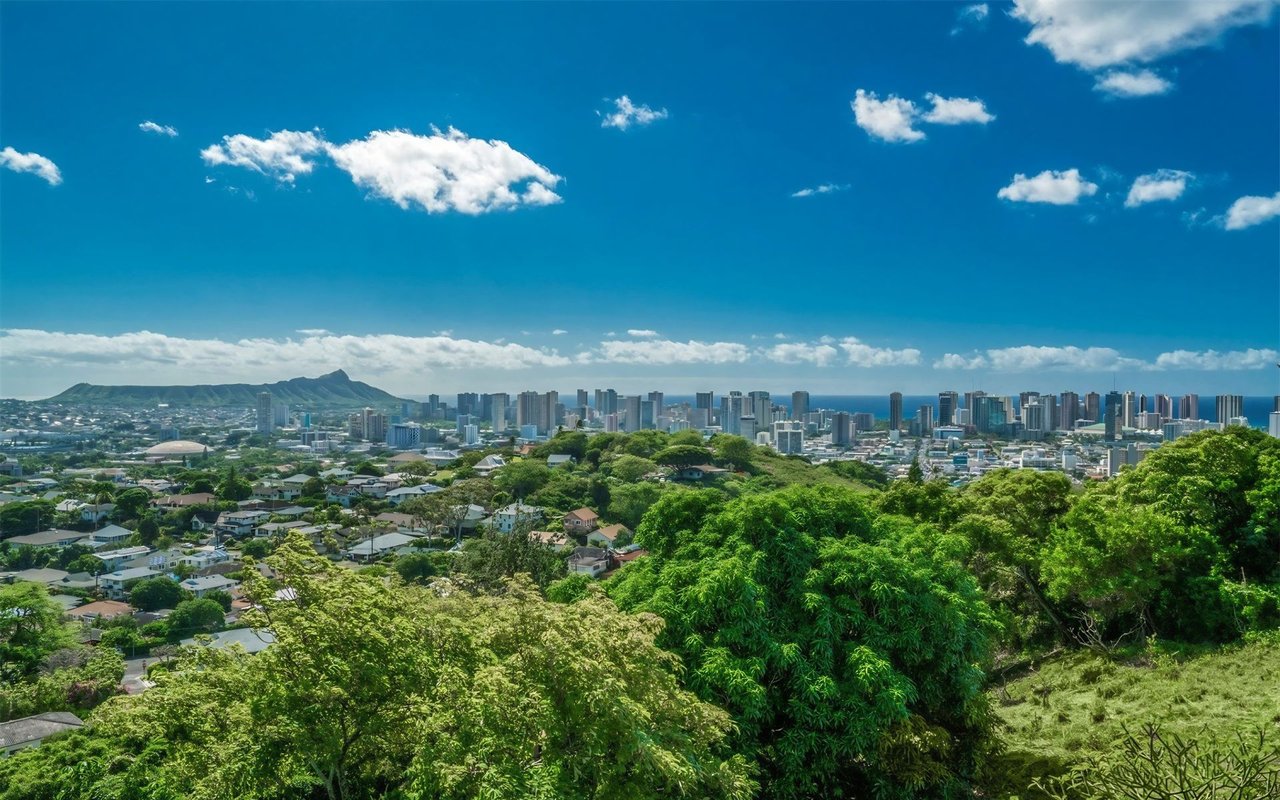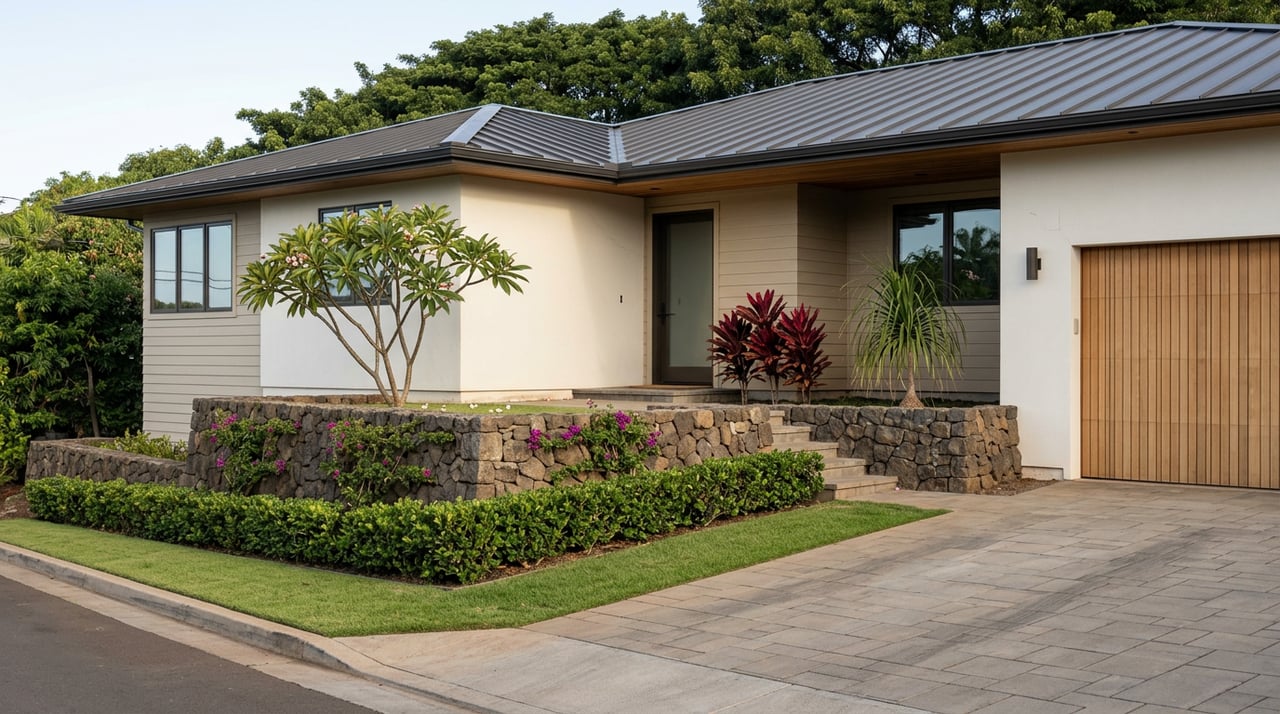
Picture two listings hitting the market in Makakilo the same week. One is a single-family home up on the ridge in Kahiwelo, fee simple, ocean and Diamond Head views from the lanai. It draws a showing crowd within days and goes under contract with multiple offers before the first open house even wraps up. A few streets over, a townhome in a gated CPR community sits with a sign in the yard for weeks. Same zip code. Same MLS region. Completely different experience for the buyer standing in each driveway.
That split is not a coincidence, and it is not visible in the single number most buyers see first: Makakilo's median sale price. The market reports tell a more interesting story once you separate single-family homes from condos and CPR townhomes, and the two have been moving in opposite directions for the better part of a year.
The Single-Family Squeeze
By January 2026, Makakilo carried the highest bid-up percentage of any market area on Oahu, at 32 percent, ahead of even Mililani's 29 percent. That means roughly one in three single-family homes that sold went for more than the asking price, a level of competition no other neighborhood on the island matched that month.
The pressure didn't ease as the year went on. In April 2026, Makakilo single-family home sales rose 21 percent year over year to 122 closings, even as active listings fell 39 percent to just 19 homes on the market at once. Months of remaining inventory, the standard measure of how long current supply would last at the current sales pace, dropped 49 percent to 1.9 months. Median days on market climbed 50 percent to 35 days, and the bid-up rate held at 27.9 percent.
Read those numbers together and the picture is less about runaway prices and more about scarcity. The median single-family price actually eased slightly over that stretch, from $1,099,500 in the West Oahu comparison late in 2025 to $1,055,000 by April 2026, a 4 percent dip. Buyers weren't necessarily paying dramatically more per home. They were competing over dramatically fewer homes. With under two months of inventory on the shelf, a single-family listing in Makakilo behaves less like a normal for-sale property and more like a ticket that sells out before most people know it went on sale.
The Condo and CPR Side Is Loosening
Now look at the other half of the same MLS-designated area. Late in 2025, Makakilo condo sales declined 9 percent to 92 units, but the real signal was on the supply side. Active condo listings soared 132 percent to 44 units, and months of remaining inventory surged 154 percent to 5.7 months, roughly three times the cushion the single-family side carried at the same point.
The spring 2026 numbers kept that gap intact. Condo sales ticked up 4 percent to 99 units in April, median days on market climbed 46 percent to 38 days, and the number of active listings held steady at 32, still well over the 19 single-family homes competing for buyers in the same window. The condo bid-up rate did rise to 39.4 percent that month, which tells you the sharpest units in the segment still draw competition. But a buyer working the condo and CPR side of Makakilo is choosing from a genuinely larger pool, with more time to think before making an offer, than a buyer chasing a single-family listing on the ridge.
| Single-family (April 2026) | Condo / CPR (April 2026) | |
|---|---|---|
| Active listings | 19 | 32 |
| Months of inventory | 1.9 | 3.9 |
| Median days on market | 35 | 38 |
| Bid-up rate | 27.9% | 39.4% |
The table makes the contradiction plain. Single-family buyers face the tightest shelf of inventory on the island. Condo and CPR buyers face more selection and more time, even though the units that do sell often still go over list.
Why the Two Markets Split
Part of the explanation traces back to how Makakilo was actually built. Development started on land once owned by the James Campbell Company in the mid-1960s and moved uphill from Lower Makakilo toward the ridge in phases, the way most Oahu ridge communities grow. Kahiwelo, built out by D.R. Horton, is the most recently completed single-family phase, though the same listing services that track Makakilo note more homes are still planned further into the hillside, so the ridge isn't fully built out yet. Whatever the exact reason, the practical effect is the same: a buyer looking at a single-family home in Makakilo right now is competing for one of a very small number of homes actually on the market.
The condo and CPR side pulls from a different supply pipeline entirely. Communities like Seascape are technically a Condominium Property Regime rather than a true condominium: a cluster of individually owned single-family-style homes with some shared driveways and common space, managed by an AOAO. Newer attached product, from Ocean Ridge to Watercolors to the Palehua buildings, keeps adding to that segment on a different timeline than the ridge's single-family lots. That's a separate buyer pool, often first-time buyers or people downsizing out of a bigger house, and it hasn't been absorbing new supply as fast as it's arriving.
What This Means If You're Comparing Neighborhoods
If you're cross-shopping Makakilo against Ewa, Waipahu, or Mililani using a single median price as your filter, you're missing the part of the story that actually determines how your search will feel. A single-family search in Makakilo puts you in the most competitive corner of the island right now, one where you should expect to write offers quickly and sometimes above asking. A CPR or townhome search in the same neighborhood puts you in a market with real room to negotiate on price and terms.
Two other details are worth checking before you compare a Makakilo listing to anything else. First, tenure. Fee simple ownership accounts for roughly 98 percent of real estate across Hawaii, but Makakilo still turns up leasehold listings on occasion, including gated single-family communities like Kumulani at Makakilo. A leasehold home carries ground rent and a lease term that a fee simple home doesn't, and that changes the real cost comparison even when the sale price looks similar. Second, HOA structure. Some of Makakilo's older single-family homes are explicitly marketed with no HOA fee at all, while newer gated CPR communities carry monthly AOAO dues on top of the mortgage. Two homes that look like the same price on a listing sheet can carry very different monthly costs once you add that up.
FAQ
Is Makakilo mostly fee simple or leasehold? Fee simple ownership accounts for about 98 percent of real estate across Hawaii, and that pattern holds broadly in Makakilo. Leasehold listings still appear occasionally, including gated single-family communities like Kumulani at Makakilo, so it's worth confirming tenure on any specific listing rather than assuming.
What's the actual difference between a CPR and a condo in Makakilo? A Condominium Property Regime like Seascape is a small cluster of individually owned, single-family-style homes that share some driveways or common space under an AOAO. A true condo or townhome building, like the newer Ocean Ridge or Watercolors properties, is attached housing. Both can show up under "condo" in market statistics, but the physical product, financing, and insurance considerations differ enough that it's worth asking which one you're actually looking at.
Why did bid-up rates stay high even as the median price cooled? Scarcity and price appreciation are two different pressures. Makakilo's single-family median actually eased slightly between late 2025 and April 2026, but the number of homes available to buy shrank even faster, down to just 19 active listings by spring. When there's less to choose from, buyers compete over what's left even if the underlying price trend has flattened.
Makakilo rewards buyers who know which side of the market they're actually standing in before they write an offer. If you're weighing a ridge-top single-family home against a CPR townhome a few streets down, or trying to figure out how a Makakilo comparison stacks up against Ewa or Kapolei, Team Hawaii can walk through the current inventory on both sides with you. Let's Connect.
This article is general information, not legal, tax or financial advice. Consult a qualified professional about your situation.